


Humans have been processing food ever since Neanderthals sizzled meat over open flames and hunter-gatherers ground wild wheat to make bread. In the 19th century, factory workers canned fruit for soldiers during the U.S. Civil War (1861-65).
But in the late 1800s, food companies began concocting products that were dramatically different from anything people could make themselves. Coca-Cola hit stores in 1886, followed by Jell-O in 1897 and Crisco vegetable oil shortening in 1911. Spam, Velveeta, Kraft Mac & Cheese, and Oreos arrived in the following decades.
These foods often promised ease and convenience. They were among the first “ultraprocessed foods,” though experts wouldn’t formally call them that until many years later.
When you hear that term now, you might think of soda, potato chips, and cookies. But it’s not just so-called “junk foods.” Items like packaged whole wheat bread, plant milks, and flavored yogurts are also usually considered ultraprocessed. The word refers to food made via industrial methods or with ingredients that you wouldn’t typically find in home kitchens, such as high fructose corn syrup (a kind of processed sugar) and hydrogenated oils (a type of processed fat used to keep food fresher longer).
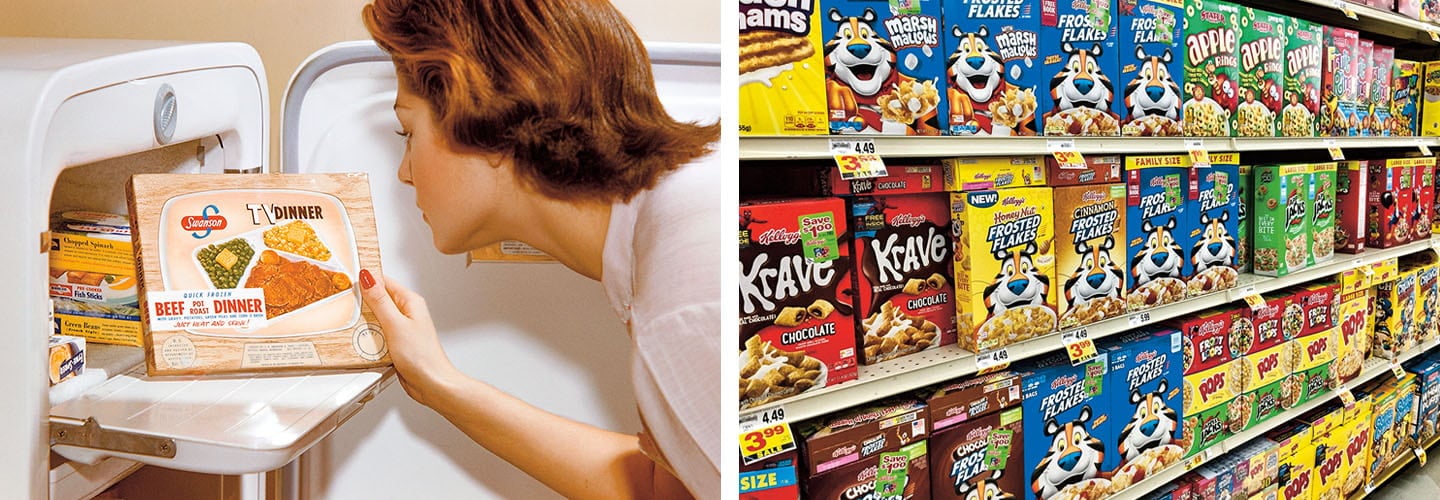
Eventually, ultraprocessed products took over grocery aisles in the United States, and they now make up about 70 percent of the food supply. Data shows that, on average, about half the calories Americans consume every day are from ultraprocessed foods. Some people—especially in urban settings and remote rural areas—have little access to other food options.
Many ultraprocessed items lack fiber, protein, vitamins, and other important nutrients, and experts say that these products are linked to certain health conditions, such as obesity, type 2 diabetes, and cardiovascular disease. However, some scientists add that we need more research, cautioning that just because these foods are associated with health issues doesn’t necessarily mean they cause them.
“The way we are eating today is unprecedented,” says Filippa Juul, an expert on nutrition and health at SUNY Downstate Health Sciences University in Brooklyn, New York. “It’s like a giant experiment. What happens when you base your diet [on] ultraprocessed foods?”
Humans have been processing food since their earliest days. Neanderthals sizzled meat over open flames, and hunter-gatherers ground wild wheat to make bread. In the 19th century, factory workers canned fruit for soldiers during the U.S. Civil War (1861-65).
But in the late 1800s, food companies began inventing products that were extremely different from anything people could make themselves. In 1886, Coca-Cola became available in stores. Jell-O appeared in 1897, and Crisco vegetable oil shortening followed in 1911. Spam, Velveeta, Kraft Mac & Cheese, and Oreos arrived in the next decades.
These foods were seen as easy and convenient. They were among the first “ultraprocessed foods,” though experts wouldn’t formally call them that until many years later.
When you hear this term, you might think of soda, chips, and cookies. But ultraprocessed foods aren’t just “junk food.” Many packaged foods, like whole wheat bread, plant-based milks, and flavored yogurt, also count. Ultraprocessed foods are made in factories and often include ingredients you wouldn’t use at home, such as high fructose corn syrup (a kind of processed sugar) or hydrogenated oils (which help food last longer).
Now ultraprocessed products make up about 70 percent of the food supply in the United States. On average, about half the calories Americans consume every day are from ultraprocessed foods. Some people—especially in urban settings and remote rural areas—have little access to other food options.
Many ultraprocessed items lack fiber, protein, vitamins, and other important nutrients. Experts say that these products are linked to certain health conditions, such as obesity, type 2 diabetes, and cardiovascular disease. However, some scientists add that we need more research. They point out that just because these foods are associated with health issues doesn’t necessarily mean they cause them.
“The way we are eating today is unprecedented,” says Filippa Juul, an expert on nutrition and health at SUNY Downstate Health Sciences University in Brooklyn, New York. “It’s like a giant experiment. What happens when you base your diet [on] ultraprocessed foods?”