

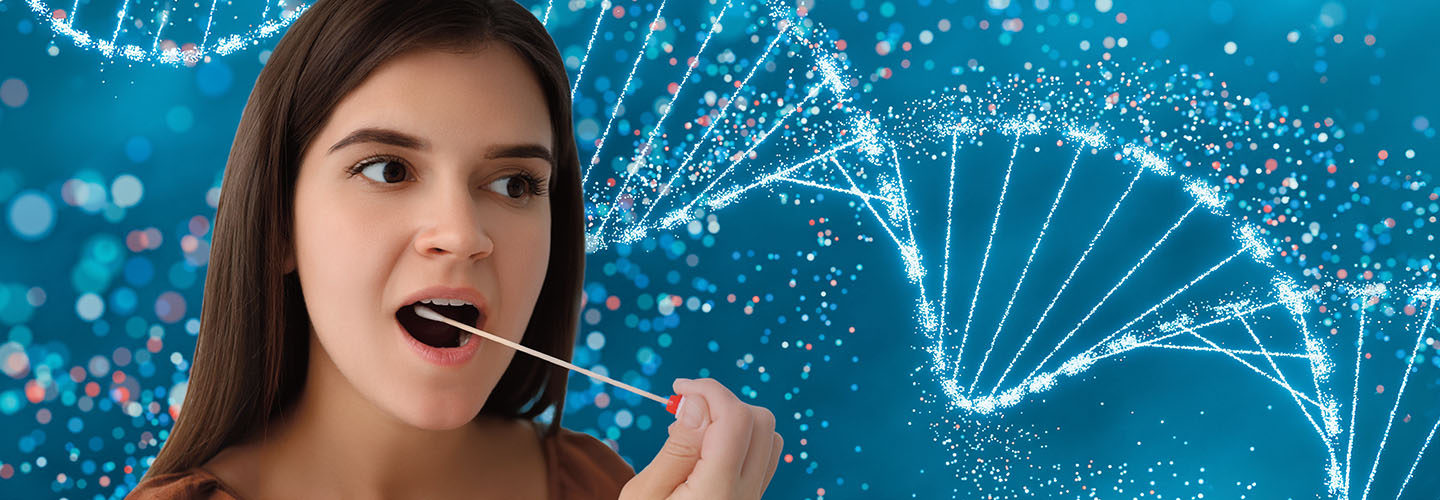

A girl uses a cotton swab to collect a DNA sample against a background of DNA double helix strands

Shutterstock.com (background); olga Yastremska/Alamy Stock Photo (swab)

Standards

Should We Share Our DNA With Genetic Testing Companies?

Over the past few decades, millions of people have sent their saliva to genetic testing companies such as AncestryDNA and 23andMe. Analyzing your DNA, these services can trace your ethnic background, locate your relatives, and identify health conditions that may run in your family.


Proponents of using the services say that they provide valuable information that helps people better understand their history and genetic makeup. But critics say customers who share their DNA don’t know who might gain access to it. Testing firms routinely sell their customers’ information to health care companies for medical research. A recent lawsuit against 23andMe claims the company is selling information without informing customers, which the company denies.


Should we share our DNA with genetic testing companies? A genealogist and a consumer advocate face off.

 True Images/Alamy Stock Photo

A testing kit containing a cheek swab is prepared for analysis by a lab technician.

“Who am I?” If you’ve ever asked yourself this question, one way to seek an answer is by testing your DNA. Just a small sample could reveal who your ancestors were, where they came from, and which traits you may have inherited from them.

Most people purchase tests directly from a company that specializes in DNA testing. Some do this out of curiosity about their ethnic or national origins. But others have more practical reasons. Adoptees often use DNA testing to identify biological parents. Others test to find relatives, such as unknown grandparents or lost siblings. As a member of a Gold Star family,* I’ve used DNA testing. My cousin served in the military and was a prisoner of war who never returned home. As his closest living relative, my DNA will be matched to any recovered remains.

Your DNA could also help researchers who study what genes can tell us about the potential for developing certain diseases. This is why testing companies share their clients’ genetic information with other companies. That research could be crucial in treating cancer patients, for example, or for couples who want to assess the risk of passing heritable diseases on to their children.

The data these companies share helps advance medical research.

It’s reasonable to be concerned about how a testing company shares your information. Before submitting a sample, review a company’s policy for sharing your DNA and understand your choices for opting in or out. And companies won’t share your information without your explicit consent.

Done securely, DNA testing can open the doors to improving health, connecting us to others, past and present, and understanding our individual uniqueness. With this knowledge comes a more informed and enlightened future.

—ROBERTA ESTES
Genealogist, Author of DNA for Native American Genealogy

Popular genetic tests promise insights into your ancestry, health, and even personality. But sending off a vial of saliva is not in your best interest. When you submit your DNA, you’re sharing your most unique identifier—your genetic code. This not only reveals your ancestry but can predict which health issues you’re at risk of developing in the future, such as cancer. Needless to say, this is very sensitive information.

When you share this information with a testing company, you’re likely also sharing it with other parties—research firms, pharmaceutical companies, and supplements manufacturers. The testing company might ask for your consent to share your DNA, but the list of companies it shares that DNA with can grow over time and include parties you wouldn’t have approved. And those parties may share your DNA with other companies.   

This information could be used against you. We have laws that ban health insurance companies from using your DNA to set the prices you pay for health care. But those laws don’t apply to other types of insurance, such as life insurance, which pays money to family members in the case of your death, or disability insurance, which covers you if you’re injured and can’t work. If you apply for one of these policies someday, that cheek swab you sent off could be used to deny you coverage or increase the price you pay—all for a health condition you may develop, not one you actually have.

Your genetic information could be used against you someday.

Your DNA isn’t just valuable to companies. Their databases are targets for hackers. Selling genetic data on the dark web is more profitable than selling email addresses and passwords.

As technology advances, industries and bad actors alike may find new ways to use your genetic information. And unlike a password, you can’t change your genetic code if it’s compromised. Once it’s out there, it’s out there for good. So be careful with your DNA. You don’t want it in just anyone’s hands.

—R.J. CROSS
Consumer advocate, Online Life Program, U.S. PIRG Education Fund

50 million

ESTIMATED NUMBER of people worldwide who have shared DNA with a commercial testing company.

Source: study, Vrije Universiteit Amsterdam, 2021

6.9 million

NUMBER of 23andMe customers whose personal data was stolen during a hack against the company in 2023.

Source: techcrunch

What does your class think?

Should we share our DNA with genetic testing companies?

Please enter a valid number of votes for one class to proceed.

Should we share our DNA with genetic testing companies?

Please select an answer to vote.

Should we share our DNA with genetic testing companies?

0%
0votes
{{result.answer}}
Total Votes: 0
Thank you for voting!
Sorry, an error occurred and your vote could not be processed. Please try again later.
Skills Sheets (1)
Lesson Plan (1)
Text-to-Speech