


Jim McMahon
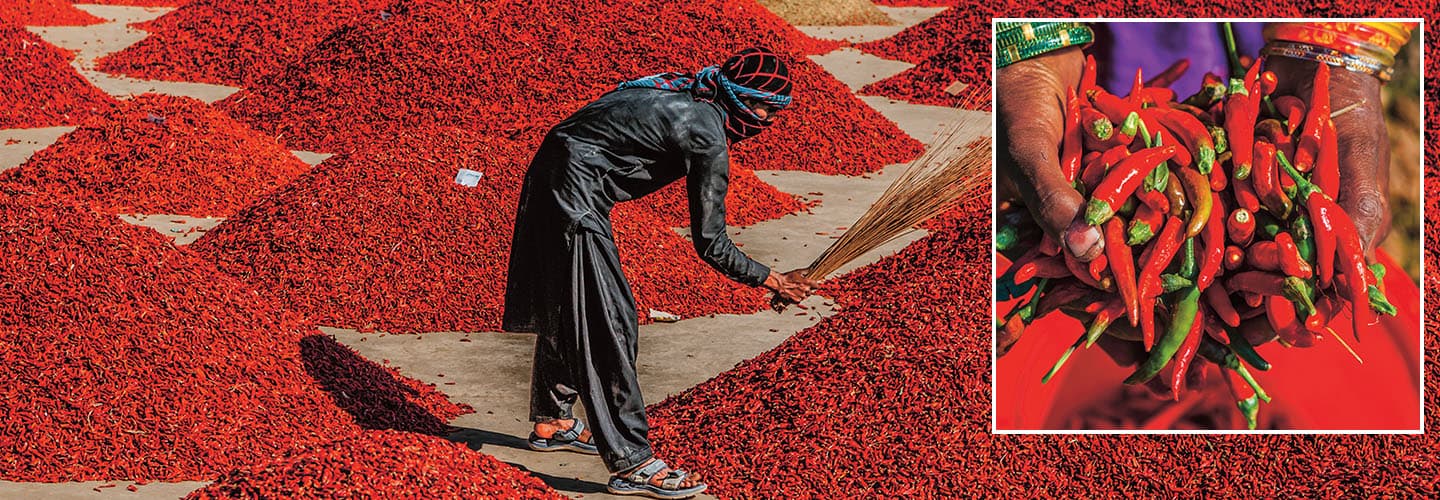
Pakistan is one of the world’s top producers of red chili peppers, and the small town of Kunri is its red chili capital. Farmers, like the one in this photo, dry the extra-spicy chilis in the sun. On market days, the dust from them is so overwhelming that the fiery air makes people’s eyes water and throats burn.
But extreme weather—such as heat, floods, and drought—is causing that way of life to slowly disappear. Agriculture accounts for nearly a quarter of Pakistan’s economy and employs half of its labor force. But the South Asian country of more than 250 million people is among the world’s most vulnerable to the effects of climate change. Floods in 2022, for example, destroyed nearly 4.5 million acres of agricultural land—an area about the size of New Jersey.
Red chilis are among the most-affected crops, and farmers say that growing them has become a constant challenge. Some have tried altering their planting schedules, adding more fertilizer to the soil, or growing other crops. But no matter what you plant, farmer Ahsan Ali Dars says, few crops may be able to hold up in extreme weather.
“It seems that nature is no longer on our side,” he says.