


Standards

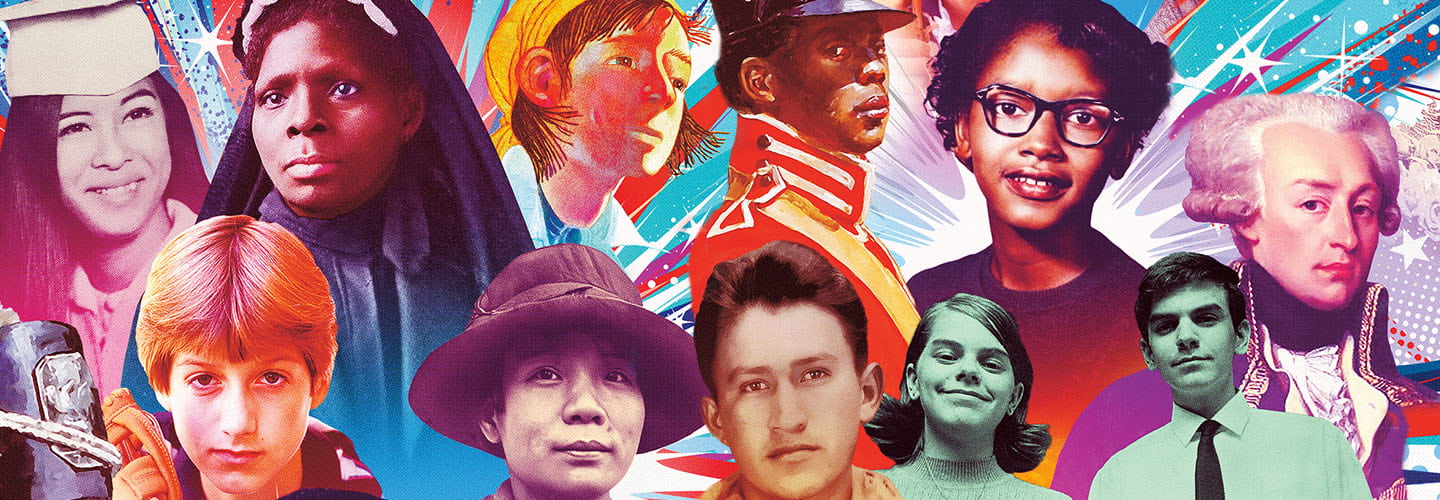
10 Teens Who Shaped America

A look at some of the many young people who have moved our nation forward

The United States has always been a nation molded by young people.

It’s easy to forget that many of the leaders of the American Revolution were strikingly young. Alexander Hamilton was 19 when he joined the Continental Army. James Madison, who later became famous for his key role in writing the U.S. Constitution, was just 25 when he was elected to the Virginia legislature during the Revolution.

That early tradition of young people making their mark has continued through the centuries.

“American youth have been much more influential both politically and culturally than elsewhere in the world,” says Paula Fass, a historian from the University of California, Berkeley. “In the United States, young people have been the ones who define the society. There’s a sense that they aren’t going to be held back by the past.”    

Here’s a look at 10 teenagers who helped shape the course of American history.

The United States has always been a nation shaped by young people.

It’s easy to forget that many of the leaders of the American Revolution were young. Alexander Hamilton was 19 when he joined the Continental Army. James Madison, who later became famous for his key role in writing the U.S. Constitution, was just 25 when he was elected to the Virginia legislature during the Revolution.

That early tradition of young people making their mark has continued through the centuries.

“American youth have been much more influential both politically and culturally than elsewhere in the world,” says Paula Fass, a historian from the University of California, Berkeley. “In the United States, young people have been the ones who define the society. There’s a sense that they aren’t going to be held back by the past.”    

Here’s a look at 10 teenagers who helped shape the course of American history.

THOMAS SAVAGE: America’s first ambassador?

Sally Wern Comport

When 13-year-old Thomas Savage arrived in Jamestown in 1608, the British colony in what is now Virginia was in desperate shape. More than half of the 104 settlers had died during its first year—of disease or starvation, or in conflicts with Native Americans.

The colony’s leaders soon chose Thomas for an important mission. On a visit to a nearby Indian village, they struck a deal with the Powhatan people that included handing Thomas over to live with them as a kind of ambassador. The hope was that having Thomas learn their language would improve relations and trade with the tribe. He was one of three English teen boys sent to live among the Powhatan; along with Pocahontas, the preteen daughter of Chief Powhatan, they served as interpreters and cultural emissaries.

These relationships “made a huge difference in terms of the limited understanding that each side had of the other,” says early American historian Karen Kupperman.

Thomas did learn the Powhatan language—a form of Algonquian—and their culture in his nearly three years living with them. But relations between the English and the Indigenous people deteriorated sharply during this period over claims to land and food, and in 1610, Thomas returned to Jamestown.

Thomas Savage arrived in Jamestown in 1608. He was just 13 years old. The British colony in what is now Virginia was in bad shape. More than half of the 104 settlers had died during its first year. They had died from disease or starvation, or in conflicts with Native Americans.

The colony’s leaders soon chose Thomas for an important mission. They had struck a deal with the Powhatan people when they visited a nearby Indian village. Thomas would be handed over to live with them as a kind of ambassador. They hoped that having Thomas learn their language would improve relations and trade with the tribe. He was one of three English teen boys sent to live among the Powhatan. They served, along with Pocahontas, the preteen daughter of Chief Powhatan, as interpreters and cultural envoys.

These relationships “made a huge difference in terms of the limited understanding that each side had of the other,” says early American historian Karen Kupperman.

Thomas did learn the Powhatan language—a form of Algonquian—and their culture in his nearly three years living with them. But relations between the English and the Indigenous people declined sharply during this period over claims to land and food. In 1610, Thomas returned to Jamestown.

MARQUIS DE LAFAYETTE: Champion of the Revolution

Niday Picture Library/Alamy Stock Photo

In 1777, two years into the Revolutionary War (1775-83), a 19-year-old French nobleman known as the Marquis de Lafayette set sail for America against the wishes of his family—and the French government. While France had delighted in the insurgency against its longtime rival Britain, it wasn’t ready to publicly support the colonists in their fight for independence. But the British had killed Lafayette’s father during the Seven Years’ War (1756-63), and he was eager to take up arms against them.

In America, Lafayette quickly rose through the ranks of the Continental Army, proving to be an adept military leader. Yet his biggest contribution to the Patriots’ cause wasn’t on the battlefield.

As an aristocrat in France, Lafayette had strong connections at Versailles, the seat of the French throne. In 1779, he returned home and pushed the French to back the Continental Army.

These efforts paid off handsomely: In addition to providing much-needed gunpowder and money, “he was able to secure about 6,000 French troops that were sent to America to fight on our side,” says Elise Reagan of the Charleston Museum in South Carolina, the colony where Lafayette first arrived. That support, she adds, ultimately helped the Continental Army to victory.

In 1777, two years into the Revolutionary War (1775-83), a 19-year-old French nobleman known as the Marquis de Lafayette set sail for America against the wishes of his family—and the French government. It was two years into the Revolutionary War (1775-83). While France had delighted in the insurgency against its longtime rival Britain, it wasn’t ready to publicly support the fight for independence. But the British had killed Lafayette’s father during the Seven Years’ War (1756-63). He was eager to join the fight against the British.

In America, Lafayette quickly rose through the ranks of the Continental Army. He was a skillful military leader but  his biggest contribution to the Patriots’ cause wasn’t on the battlefield.

As an aristocrat in France, Lafayette had strong connections at Versailles, the seat of the French throne. In 1779, he returned home and pushed the French to back the Continental Army.

These efforts paid off handsomely. In addition to providing much-needed gunpowder and money, “he was able to secure about 6,000 French troops that were sent to America to fight on our side,” says Elise Reagan of the Charleston Museum in South Carolina, the colony where Lafayette first arrived. That support, she adds, ultimately helped the Continental Army to victory.

JORDAN B. NOBLE: Drummer boy turned war hero 

©Don Troiani/Bridgeman Images

Jordan B. Noble was just 14 when he went into battle during the War of 1812 (1812-15). He was an enslaved teen who served as a drummer boy under General (and future president) Andrew Jackson. Jordan became a hero of the Battle of New Orleans, a resounding American victory.

As British forces closed in on New Orleans in late 1814, hoping to capture the important port, Jordan was among 900 freed and enslaved men who helped defend the city. In the early 19th century, drummer boys still played a key role in the U.S. Army: Their drumming helped rally troops, keep morale up, and communicate orders amid the confusion of battle.

On December 23, 1814, Jackson led a surprise attack on the British troops that had arrived to seize New Orleans. With the battlefield enveloped by fog, Jordan’s drumming helped the American soldiers stay organized and defeat the British. When British soldiers regrouped and launched a pre-dawn attack on January 8, 1815, the Americans, with the aid of Jordan’s steady drumbeats, quickly defeated them.

A newspaper article from the time of Jordan’s death in 1890 described the 14-year-old’s vital role in the Battle of New Orleans: “[T]he rattle of his drum was heard amidst the din of battle.”

Jordan B. Noble was just 14 when he went into battle during the War of 1812 (1812-15). The enslaved teen was a drummer boy under General (and future president) Andrew Jackson. Jordan became a hero of the Battle of New Orleans, a resounding American victory.

British forces closed in on New Orleans in late 1814. They hoped to capture the important port. Jordan was among 900 freed and enslaved men who helped defend the city. In the early 19th century, drummer boys still played a key role in the U.S. Army. Not only did their drumming help rally troops and keep morale up, but it communicated orders amid the confusion of battle.

On December 23, 1814, Jackson led a surprise attack on the British troops that had arrived to seize New Orleans. The battlefield was enveloped by fog.  Jordan’s drumming helped the American soldiers stay organized and defeat the British. The British soldiers regrouped and launched a pre-dawn attack on January 8, 1815. The Americans, with the aid of Jordan’s steady drumbeats, quickly defeated them.

A newspaper article from the time of Jordan’s death in 1890 described the 14-year-old’s vital role in the Battle of New Orleans: “[T]he rattle of his drum was heard amidst the din of battle.”

DappledHistory.com/Alamy Stock Photo

Taylor treated wounded soldiers of this Black Union regiment.

SUSIE KING TAYLOR:Civil War nurse and teacher 

Born into slavery in Georgia in 1848, Susie King Taylor secretly attended school and learned to read and write even though it was illegal for Black Americans to be educated. In 1862, during the Civil War (1861-65), when Union troops attacked a nearby fort, 14-year-old Susie and her uncle escaped and found refuge on a Union warship.

The ship’s commander was impressed by her education, and arranged for her to teach African American children during the day and adults at night. When a regiment of Black troops was formed a few months later, Susie’s duties were expanded to include gun maintenance and nursing. She dressed soldiers’ wounds and cared for the many who fell ill with typhoid, malaria, cholera, and other diseases. And she never stopped teaching.

“I taught a great many of the comrades in Company E to read and write, when they were off duty,” Susie recalled in a memoir published in 1902. “Nearly all were anxious to learn.”

Susie King Taylor was born into slavery in Georgia in 1848. At the time, it was illegal for Black Americans to be educated. However, she secretly attended school and learned to read and write. In 1862, during the Civil War (1861-65), when Union troops attacked a nearby fort, 14-year-old Susie and her uncle escaped. They found refuge on a Union warship.

The ship’s commander was impressed by her education. He arranged for her to teach African American children during the day and adults at night. A regiment of Black troops was formed a few months later. Susie’s duties were expanded to include gun maintenance and nursing. She dressed soldiers’ wounds and cared for the many who fell ill with typhoid, malaria, cholera, and other diseases. And she never stopped teaching.

“I taught a great many of the comrades in Company E to read and write, when they were off duty,” Susie recalled in a memoir published in 1902. “Nearly all were anxious to learn.”

MABEL PING-HUA LEE:Advocate for women’s suffrage 

Library of Congress

When thousands of suffragists marched through the streets of New York City in 1912, demanding women’s right to vote, 16-year-old Mabel Ping-Hua Lee sat atop a white horse and helped lead the way.

At a time when Chinese migration to the United States was largely banned under the Chinese Exclusion Act, Mabel had refused to blend into the background. She had published articles in a monthly magazine for Chinese students in America and given speeches advocating that women get the vote.

In the spring of 1912, Mabel met with prominent suffragists. She so impressed them with her thoughts about women’s rights and educational opportunities for girls that they asked her to help lead their upcoming march through New York.

Thousands of suffragists marched through the streets of New York City in 1912, demanding women’s right to vote. Helping to lead the way was 16-year-old Mabel Ping-Hua Lee sitting atop a white horse.

Mabel had refused to blend into the background. (At the time, Chinese migration to the United States was largely banned under the Chinese Exclusion Act.) She had published articles in a monthly magazine for Chinese students in America. And she had given speeches advocating that women get the vote.

In the spring of 1912, Mabel met with important suffragists. She impressed them with her thoughts about women’s rights and educational opportunities for girls. They asked her to help lead their upcoming march through New York.

Mabel refused to blend into the background.

After the march, Mabel continued her advocacy. In one article, published when she was 17, she wrote that giving women the vote was “nothing more than a wider application of our ideas of justice and equality” and extending “democracy to women.”

When American women officially won the right to vote with the ratification of the 19th Amendment in 1920, Mabel couldn’t go to the ballot box. According to the Chinese Exclusion Act, which Congress didn’t repeal until 1943, she wasn’t a U.S. citizen.

After the march, Mabel continued her advocacy. In one article, published when she was 17, she wrote that giving women the vote was “nothing more than a wider application of our ideas of justice and equality” and extending “democracy to women.”

In 1920, American women officially won the right to vote with the ratification of the 19th Amendment. But Mabel couldn’t go to the ballot box. According to the Chinese Exclusion Act, which Congress didn’t repeal until 1943, she wasn’t a U.S. citizen.

THOMAS BEGAY:Creator of an unbreakable code

Courtesy Begay Family

When the U.S. military fought Japan during World War II (1939-45), one of its biggest challenges was figuring out how to send radio communications across thousands of miles of the Pacific Ocean without the Japanese military intercepting the messages. The Americans needed an unbreakable code.

After 16-year-old Thomas Begay enlisted in the Marines with his mother’s permission in 1943, he became part of a small group of Navajo troops who developed a code that was based on their native Navajo language.

The Navajo code talkers, as they soon became known, created a unique vocabulary based on Navajo words for more than 400 military terms. The Navajo all memorized the entire list, making it possible to quickly transmit key military information via radio to other code talkers. The mission was quite a shift for Thomas, who at 13 had been sent to a residential boarding school where he was discouraged from speaking Navajo.

As the U.S. battled Japan for control of the Pacific, the code talkers were crucial to America’s success, and Thomas was in the thick of the fighting at the Battle of Iwo Jima in 1945. He was proud of his service to his country and of his and other Navajos’ unique role in the war.

“It means a lot to me,” he said in a 2015 interview with the Department of Veterans Affairs. “We helped save lives.”

One of the biggest challenges the U.S. military faced as they fought Japan during World War II (1939-45) was figuring out how to send radio communications across thousands of miles of the Pacific Ocean without the Japanese military intercepting the messages. The Americans needed an unbreakable code.

In 1943, when Thomas Begay was 16 years old, he enlisted in the Marines with his mother’s permission. He became part of a small group of Navajo troops who developed a code that was based on their native Navajo language.

The Navajo code talkers, as they soon became known, created a unique vocabulary based on Navajo words for more than 400 military terms. The Navajo memorized the entire list. It made it possible to quickly transmit key military information via radio to other code talkers. The mission was quite a shift for Thomas. At 13 he had been sent to a residential boarding school where he was discouraged from speaking Navajo.

As the U.S. battled Japan for control of the Pacific, the code talkers were crucial to America’s success. Thomas was in the thick of the fighting at the Battle of Iwo Jima in 1945. He was proud of his service to his country and of his and other Navajos’ unique role in the war.

“It means a lot to me,” he said in a 2015 interview with the Department of Veterans Affairs. “We helped save lives.”

The Untold Unbreakable Code
During World War II, Native Americans were recruited to develop an indecipherable code based on Navajo language.

MABEL PING-HUA LEE:Advocate for women’s suffrage 

Alamy Stock Photo

Rosa Parks became the face of the civil rights movement in December 1955 when she refused to give up her seat to a White person on a bus in Montgomery, Alabama. But a 15-year-old high school student had taken the same brave stand several months earlier.

On March 2, Claudette Colvin was sitting on a crowded bus when the driver demanded that she give her seat to a White woman. But Claudette, who’d had enough of the racist Jim Crow laws that segregated Black and White people in the South, refused. The bus driver called the police, who arrested her.

In December 1955, Rosa Parks became the face of the civil rights movement. She refused to give up her seat to a White person on a bus in Montgomery, Alabama. But a 15-year-old high school student had taken the same brave stand several months earlier.

On March 2, Claudette Colvin was sitting on a crowded bus. The driver demanded that she give her seat to a White woman. But Claudette, who’d had enough of the racist Jim Crow laws that segregated Black and White people in the South, refused. The bus driver called the police. She was arrested.

Claudette’s rebellion signaled a new spirit in Montgomery.

Black people in Montgomery had been subjected to such mistreatment for years, but Claudette’s rebellion signaled a new spirit. When Parks refused to give up her bus seat later that year, the act sparked the Montgomery bus boycott led by Reverend Martin Luther King Jr. African Americans refused to ride city buses until the laws were changed.

Although Parks’s story is better known today, Claudette continued to play a huge role in the desegregation of Montgomery’s buses. She was one of the plaintiffs in Browder v. Gayle, a federal court case that challenged the city’s bus policy. In 1956, that case—including Claudette’s testimony—made its way to the U.S. Supreme Court, which declared segregation on all the nation’s public buses unconstitutional.

Black people in Montgomery had been subjected to such mistreatment for years, but Claudette’s rebellion signaled a new spirit. When Parks refused to give up her bus seat later that year, the act sparked the Montgomery bus boycott. Reverend Martin Luther King Jr. led the movement and African Americans refused to ride city buses until the laws were changed.

Although Parks’s story is better known today, Claudette continued to play a huge role in the desegregation of Montgomery’s buses. She was one of the plaintiffs in Browder v. Gayle. The federal court case challenged the city’s bus policy. In 1956, that case—including Claudette’s testimony—made its way to the U.S. Supreme Court. In its ruling, the Court declared segregation on all the nation’s public buses unconstitutional.

Claudette Colvin: The Original Rosa Parks
Months before Rosa Parks did the same, this 15-year-old schoolgirl refused to give her seat on the bus to a White passenger.

JOHN AND MARY BETH TINKER: Protectors of students’ free speech 

Bettmann Archive/Getty Images

In December 1965, siblings John and Mary Beth Tinker and their friend Chris Eckhardt wore black armbands to school in Des Moines, Iowa, to protest the Vietnam War (1954-75). School officials told 15-year-old John and 13-year-old Mary Beth to remove the armbands, and when they refused, they were suspended.

Did suspending the students violate their First Amendment right to free speech? The Tinkers, Eckhardt, and their parents thought so. They sued the school district.

The case made it all the way to the Supreme Court, which in 1969 ruled 7-2 in favor of the students. The Court famously stated that students and teachers don’t “shed their constitutional rights to freedom of speech
or expression at the schoolhouse gate.”

The landmark case clarified that public school students have the right to voice their opinions, as long as they’re not interfering with the ability of the school to function or disrupting the right of other students to learn.

Fifty-seven years later, Tinker v. Des Moines Independent Community School District is considered the most important case regarding students and freedom of expression.

“I had no idea that our small action was going to turn into such a big thing,” says Mary Beth Tinker, now 73.

In December 1965, siblings John and Mary Beth Tinker and their friend Chris Eckhardt wore black armbands to school in Des Moines, Iowa, to protest the Vietnam War (1954-75). School officials told 15-year-old John and 13-year-old Mary Beth to remove the armbands. They refused and were suspended.

The Tinkers, Eckhardt, and their parents thought the suspension violated their First Amendment right to free speech. They sued the school district.

The case made it all the way to the Supreme Court in 1969. It ruled 7-2 in favor of the students. The Court famously stated that students and teachers don’t “shed their constitutional rights to freedom of speech or expression at the schoolhouse gate.”

The landmark case clarified that Public school students can express their opinions as long as they don’t disrupt the school or interfere with other students’ learning.

Fifty-seven years later, Tinker v. Des Moines Independent Community School District is considered the most important case regarding students and freedom of expression.

“I had no idea that our small action was going to turn into such a big thing,” says Mary Beth Tinker, now 73.

PAULA CRISOSTOMO: Organizer for equal schools 

Courtesy of Paula Crisostomo

Mexican Americans had long faced discrimination in Los Angeles’s public schools. In the 1960s, they still lacked college prep classes, and students could be paddled for speaking Spanish.

By her senior year, 17-year-old Paula Crisostomo had had enough. She helped organize a student walkout to protest the harsh conditions. In March 1968, more than 15,000 Mexican American students from schools across Los Angeles marched out of their classrooms.

The students demanded that the schools end corporal punishment, teach Mexican American history, and remove teachers and administrators who discriminated against Mexican American students.

The walkouts galvanized community support and ultimately resulted in the school district hiring more Hispanic teachers and introducing bilingual classes and ethnic studies. Many historians say the protests also demonstrated the growing influence of the Chicano movement, which fought for equal rights for Mexican Americans.

“We were asking for a better education,” Crisostomo told the website Bloomberg CityLab in 2018, “for teachers to treat us like we had human intellectual potential.”

Mexican Americans had long faced discrimination in Los Angeles’s public schools in the 1960s. They lacked college prep classes. Students could be paddled for speaking Spanish.

By her senior year, 17-year-old Paula Crisostomo had had enough. She helped organize a student walkout to protest the harsh conditions. In March 1968, more than 15,000 Mexican American students from schools across Los Angeles marched out of their classrooms.

The students demanded that the schools end corporal punishment. They wanted Mexican American history to be taught and the removal of teachers and administrators who discriminated against Mexican American students.

The walkouts united community support and ultimately resulted in the school district hiring more Hispanic teachers. Schools also introduced bilingual classes and ethnic studies. Many historians say the protests also demonstrated the growing influence of the Chicano movement, which fought for equal rights for Mexican Americans.

“We were asking for a better education,” Crisostomo told the website Bloomberg CityLab in 2018, “for teachers to treat us like we had human intellectual potential.”

RYAN WHITE: Voice for AIDS awareness 

ZUMA Press, Inc./Alamy Stock Photo

When Ryan White was 13, he became a household name. He had AIDS, which was then a deadly, untreatable disease. In 1985, he began fighting to attend the Indiana public school that had banned him out of fear that he would infect his classmates.

At the time, many people erroneously believed that AIDS spread through casual contact. In fact, H.I.V., the virus that attacks the immune system and causes AIDS, is transmitted only through bodily fluids. Ryan had contracted AIDS through a blood transfusion.

In 1988, when he was 16, Ryan testified about his experiences to the Presidential Commission on the H.I.V. Epidemic.

“I was not welcome anywhere,” he said. “People would get up and leave so they would not have to sit anywhere near me. Even at church, people would not shake my hand.”

Ryan died of AIDS in 1990, at age 18. Thomas Brandt, then the spokesman for the National Commission on AIDS, said Ryan had played a key role in encouraging public acceptance of AIDS patients.

“After seeing a person like Ryan White, such a fine and loving and gentle person,” he said, “it was hard for people to justify discrimination against people who suffer from this terrible disease.” 

When Ryan White was 13, he became a household name. He had AIDS, which was then a deadly, untreatable disease. In 1985, he began fighting to attend an Indiana public school. He had been banned out of fear that he would infect his classmates.

At the time, many people incorrectly believed that AIDS spread through casual contact. In fact, H.I.V., the virus that attacks the immune system and causes AIDS, is transmitted only through bodily fluids. Ryan had contracted AIDS through a blood transfusion.

In 1988, when he was 16, Ryan testified about his experiences to the Presidential Commission on the H.I.V. Epidemic.

“I was not welcome anywhere,” he said. “People would get up and leave so they would not have to sit anywhere near me. Even at church, people would not shake my hand.”

Ryan died of AIDS in 1990, at age 18. Thomas Brandt, then the spokesman for the National Commission on AIDS, said Ryan had played a key role in encouraging public acceptance of AIDS patients.

“After seeing a person like Ryan White, such a fine and loving and gentle person,” he said, “it was hard for people to justify discrimination against people who suffer from this terrible disease.” 

videos (2)
videos (2)
Skills Sheets (7)
Skills Sheets (7)
Skills Sheets (7)
Skills Sheets (7)
Skills Sheets (7)
Skills Sheets (7)
Skills Sheets (7)
Lesson Plan (1)
Leveled Articles (1)
Text-to-Speech