

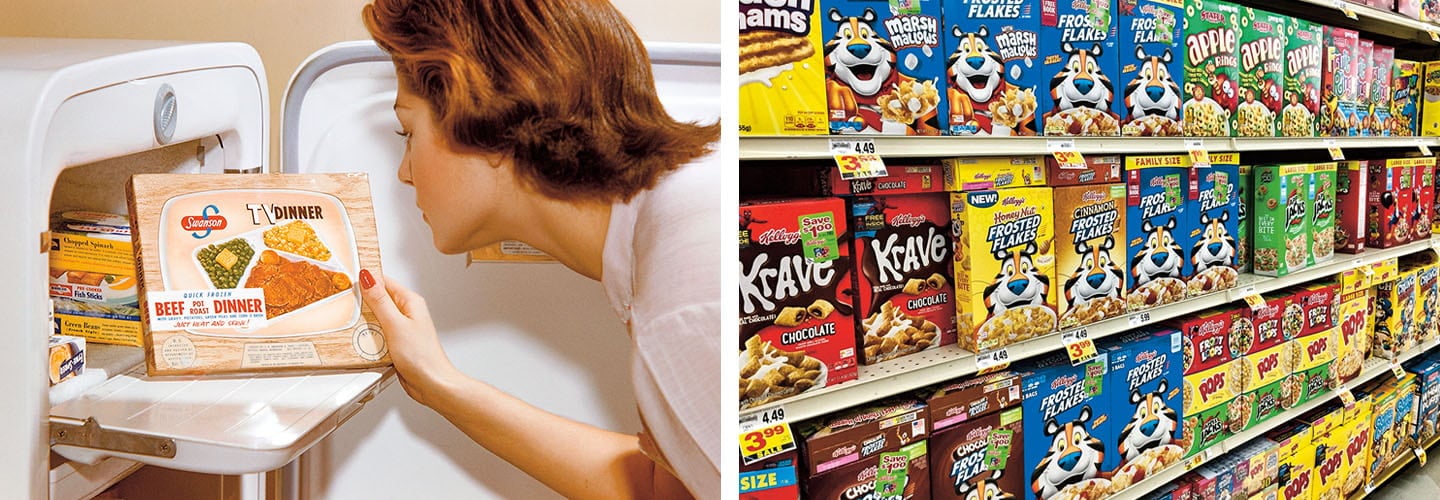

THEN (left): Americans got hooked on the convenience of  processed foods in the 1950s. NOW (right): Ultraprocessed foods make up about 70 percent of the nation’s food supply.  William Gottlieb/Corbis via Getty Images (dinner); KKStock/Alamy Stock Photo (cereal)

Standards

Time to Change America’s Menu?

Experts are concerned that our reliance on ultraprocessed foods is harming our health. How did we get here?

Humans have been processing food ever since Neanderthals sizzled meat over open flames and hunter-gatherers ground wild wheat to make bread. In the 19th century, factory workers canned fruit for soldiers during the U.S. Civil War (1861-65).

But in the late 1800s, food companies began concocting products that were dramatically different from anything people could make themselves. Coca-Cola hit stores in 1886, followed by Jell-O in 1897 and Crisco vegetable oil shortening in 1911. Spam, Velveeta, Kraft Mac & Cheese, and Oreos arrived in the following decades.

These foods often promised ease and convenience. They were among the first “ultraprocessed foods,” though experts wouldn’t formally call them that until many years later.

 When you hear that term now, you might think of soda, potato chips, and cookies. But it’s not just so-called “junk foods.” Items like packaged whole wheat bread, plant milks, and flavored yogurts are also usually considered ultraprocessed. The word refers to food made via industrial methods or with ingredients that you wouldn’t typically find in home kitchens, such as high fructose corn syrup (a kind of processed sugar) and hydrogenated oils (a type of processed fat used to keep food fresher longer).

Eventually, ultraprocessed products took over grocery aisles in the United States, and they now make up about 70 percent of the food supply. Data shows that, on average, about half the calories Americans consume every day are from ultraprocessed foods. Some people—especially in urban settings and remote rural areas—have little access to other food options.

Many ultraprocessed items lack fiber, protein, vitamins, and other important nutrients, and experts say that these products are linked to certain health conditions, such as obesity, type 2 diabetes, and cardiovascular disease. However, some scientists add that we need more research, cautioning that just because these foods are associated with health issues doesn’t necessarily mean they cause them.

“The way we are eating today is unprecedented,” says Filippa Juul, an expert on nutrition and health at SUNY Downstate Health Sciences University in Brooklyn, New York. “It’s like a giant experiment. What happens when you base your diet [on] ultraprocessed foods?”

Humans have been processing food since their earliest days. Neanderthals sizzled meat over open flames, and hunter-gatherers ground wild wheat to make bread. In the 19th century, factory workers canned fruit for soldiers during the U.S. Civil War (1861-65).

But in the late 1800s, food companies began inventing products that were extremely different from anything people could make themselves. In 1886, Coca-Cola became available in stores. Jell-O appeared in 1897, and Crisco vegetable oil shortening followed in 1911. Spam, Velveeta, Kraft Mac & Cheese, and Oreos arrived in the next decades.

These foods were seen as easy and convenient. They were among the first “ultraprocessed foods,” though experts wouldn’t formally call them that until many years later.

When you hear this term, you might think of soda, chips, and cookies. But ultraprocessed foods aren’t just “junk food.” Many packaged foods, like whole wheat bread, plant-based milks, and flavored yogurt, also count. Ultraprocessed foods are made in factories and often include ingredients you wouldn’t use at home, such as high fructose corn syrup (a kind of processed sugar) or hydrogenated oils (which help food last longer).

Now ultraprocessed products make up about 70 percent of the food supply in the United States. On average, about half the calories Americans consume every day are from ultraprocessed foods. Some people—especially in urban settings and remote rural areas—have little access to other food options.

Many ultraprocessed items lack fiber, protein, vitamins, and other important nutrients. Experts say that these products are linked to certain health conditions, such as obesity, type 2 diabetes, and cardiovascular disease. However, some scientists add that we need more research. They point out that just because these foods are associated with health issues doesn’t necessarily mean they cause them.

“The way we are eating today is unprecedented,” says Filippa Juul, an expert on nutrition and health at SUNY Downstate Health Sciences University in Brooklyn, New York. “It’s like a giant experiment. What happens when you base your diet [on] ultraprocessed foods?”

Are Ultraprocessed Foods Actually Worse?
Defining “ultraprocessed” and discussing what those foods mean for our health

Wartime Innovation

So how did ultraprocessed foods manage to take over so much of the American diet? During World War II (1939-45), the U.S. military developed shelf-stable foods like powdered cheeses, dehydrated potatoes, canned meats, and melt-resistant chocolate bars to feed soldiers. New additives like preservatives, flavorings, and vitamins were infused into them, and they were packaged in novel ways to withstand hard helicopter drops, wet beach landings, and days at the bottom of rucksacks.

After the war, food companies realized that they could adapt this foxhole cuisine into profitable convenience foods for the masses. Advertisements told homemakers that these products offered superior nutrition and could save them time in the kitchen. Wonder Bread commercials from the 1950s, for instance, claimed the bread’s vitamins and minerals would help children “grow bigger and stronger.” An ad for Swift’s canned hamburgers boasted that they were “out of the can and onto the bun” in minutes.

In the 1950s and ’60s, more women began working outside the home but were still expected to feed their families. Fish sticks, frozen waffles, and TV dinners filled modern freezers, and convenience foods became more popular. These products weren’t all ultraprocessed. Some were just whole foods that had been frozen or canned with a simple ingredient, like salt. But during this time, Americans got used to the idea that packaged goods could replace cooking from scratch. People also moved from farms and cities to the suburbs, where large supermarkets stocked new varieties of packaged foods.

In a Time magazine cover story from 1959, a writer described a “working wife” preparing dinner for 14 guests from frozen lobster and asparagus, instant rice, and canned mushrooms. “Such jiffy cooking would have made Grandma shudder,” the article said, “but today it brings smiles of delight to millions of U.S. housewives.”

So how did ultraprocessed foods take over so much of the American diet? During World War II (1939-45), the U.S. military developed shelf-stable foods. Powdered cheeses, dehydrated potatoes, canned meats, and melt-resistant chocolate bars made it easier to feed soldiers. New additives like preservatives, flavorings, and vitamins were infused into them. Packaging had to be designed in creative ways to withstand hard helicopter drops, wet beach landings, and days at the bottom of rucksacks.

After the war, food companies realized that they could adapt the rations into profitable convenience foods for everyone. Advertisements told homemakers that these products offered superior nutrition and could save them time. Wonder Bread commercials from the 1950s, for instance, claimed the bread’s vitamins and minerals would help children “grow bigger and stronger.” An ad for Swift’s canned hamburgers boasted that they were “out of the can and onto the bun” in minutes.

In the 1950s and ’60s, more women began working outside the home. They were still expected to feed their families, however. Fish sticks, frozen waffles, and TV dinners filled modern freezers. Convenience foods became more popular. These products weren’t all ultraprocessed. Some were just whole foods that had been frozen or canned with a simple ingredient, like salt. That meant Americans got used to the idea that packaged goods could replace cooking from scratch. People also moved from farms and cities to the suburbs, where large supermarkets stocked new varieties of packaged foods.

In a Time magazine cover story from 1959, a writer described a “working wife” preparing dinner for 14 guests from frozen lobster and asparagus, instant rice, and canned mushrooms. “Such jiffy cooking would have made Grandma shudder,” the article said, “but today it brings smiles of delight to millions of U.S. housewives.”

Retro AdArchives/Alamy Stock Photo

Ads that began appearing in the 1940s played up the ease of packaged foods.

Ultraprocessed Food Explosion

By the 1970s, farm subsidies* and innovations in fertilizer, pesticide, and crop development led to a glut of grain. Corn and wheat supplies roughly doubled between 1970 and 1990, and those grains were transformed into cheap ingredients we see in ultraprocessed foods today, such as high fructose corn syrup, vegetable oil, and modified starch. Between 1970 and 1993, high fructose corn syrup consumption among U.S. children and adults increased a hundredfold.

“An alternate universe of food products” was created, says David A. Kessler, a former commissioner of the Food and Drug Administration.

At the same time, televisions were becoming ubiquitous in American homes. Elementary school students soon were spending hours in front of the TV, viewing thousands of commercials for sugary cereals, candies, and fast foods every year. Animated characters such as Tony the Tiger, Count Chocula, and Fred Flintstone blurred the line between ads and morning cartoons. In 1977, consumer groups petitioned federal regulators to ban the marketing of sugary foods to children, but food industry lobbying halted those efforts.

In the 1980s, investors began pressuring food manufacturers to show larger profits, so the companies developed thousands of new drinks and foods—especially snacks—and marketed them aggressively. By the 21st century, you couldn’t walk through a school cafeteria, supermarket, or airport without being inundated by ultraprocessed foods.

Obesity kept ticking up, affecting about 36 percent of adults and nearly 17 percent of children in the United States by 2010. Concerned health experts urged Americans to avoid additives like fat and sugar.

By the 1970s, farm subsidies and innovations in fertilizer, pesticide, and crop development led to an abundance of grain. Corn and wheat supplies roughly doubled between 1970 and 1990. Those grains were transformed into cheap ingredients we see in ultraprocessed foods today, such as high fructose corn syrup, vegetable oil, and modified starch. Between 1970 and 1993, high fructose corn syrup consumption among U.S. children and adults increased by one hundred times.

“An alternate universe of food products” was created, says David A. Kessler, a former commissioner of the Food and Drug Administration.

At the same time, televisions were becoming standard in American homes. Elementary school students soon were spending hours in front of the TV. Suddenly they were viewing thousands of commercials for sugary cereals, candies, and fast foods every year. Animated characters such as Tony the Tiger, Count Chocula, and Fred Flintstone blurred the line between ads and morning cartoons. In 1977, consumer groups petitioned federal regulators to ban the marketing of sugary foods to children. Food industry lobbying stopped those efforts.

In the 1980s, investors began pressuring food manufacturers to show larger profits. Companies developed thousands of new drinks and foods —especially snacks —and marketed them aggressively. By the 21st century, you couldn’t walk through a school cafeteria, supermarket, or airport without being overwhelmed by ultraprocessed foods.

By 2010, obesity was affecting about 36 percent of adults and nearly 17 percent of children in the United States. Concerned health experts told Americans to avoid additives like fat and sugar.

Carolyn Jenkins/Alamy Stock Photo (Marvel candy bar); Shutterstock.com (all other images)

Food brands have targeted kids with their marketing for decades.

A Bipartisan Issue

As anxiety over ultraprocessed foods increased, food companies made changes. They began selling products they marketed as “healthier.” Those included low-carb breakfast cereals and shakes, artificially sweetened ice creams and yogurts, and snacks like Oreos and Doritos in smaller, 100-calorie packs. Last year, Coca-Cola began selling soda that uses cane sugar rather than high fructose corn syrup. While popular with consumers, the new options didn’t make a noticeable dent in obesity rates.

Scientists studying ultraprocessed foods and their effects eventually came to a startling conclusion. For generations, obesity was seen as a problem of willpower—caused by eating too much and exercising too little. But in the past decade, research on ultraprocessed foods has suggested that they may actually drive us to eat more.

In 2019, a landmark study from the National Institutes of Health concluded that many ultraprocessed foods cause people to overeat. Scientists found that people consumed significantly more calories when they ate a diet high in ultraprocessed foods like breakfast cereals, white bread, and processed meats. These foods caused a rise in hunger hormones compared with a diet that contained mostly minimally processed foods like fresh fruits and vegetables, eggs, and whole grains.

Ultraprocessed foods “are designed to exploit our biology, meaning that it’s very hard to regulate to eat the right amount [and avoid] negative health consequences,” says Juul of SUNY Downstate. “[People] shouldn’t feel ashamed that they crave these foods. They’re actually engineered for that.”

As concerns about ultraprocessed foods grew, food companies started changing their products. They sold new “healthier” items like low-carb cereals and shakes, artificially sweetened ice creams and yogurts, and smaller snack packs with fewer calories. Even though people liked these options, the products did not reduce obesity rates.

Scientists studying ultraprocessed foods and their effects eventually came to a surprising conclusion. For years, obesity was seen as a problem of willpower. It was thought people were eating too much and exercising too little. But in the past decade, research on ultraprocessed foods has suggested that they may actually drive us to eat more.

In 2019, a study from the National Institutes of Health concluded that many ultraprocessed foods cause people to overeat. Scientists found that people consumed significantly more calories when they ate a diet high in ultraprocessed foods like breakfast cereals, white bread, and processed meats. These foods caused a rise in hunger hormones compared with a diet that contained mostly minimally processed foods like fresh fruits and vegetables, eggs, and whole grains.

Ultraprocessed foods “are designed to exploit our biology, meaning that it’s very hard to regulate to eat the right amount [and avoid] negative health consequences,” says Juul of SUNY Downstate. “[People] shouldn’t feel ashamed that they crave these foods. They’re actually engineered for that.”

 A study found that processed foods cause people to overeat.

Today many scientists, advocates, and lawmakers from all over the nation are publicly condemning ultraprocessed foods. In January, the Trump administration released new dietary guidelines that urge Americans to avoid sugary, processed foods, which health secretary Robert F. Kennedy Jr. has said are poisonous to health.

“My message is clear: Eat real food,” Kennedy said while rolling out the guidelines.

In addition, Democrats and Republicans in California, who are usually deeply divided, passed a law last year that laid a foundation for eventually banning ultraprocessed foods from schools. And in December, a bipartisan group in the U.S. House of Representatives introduced a bill that would expand research on the health effects of ultraprocessed foods and increase education about the potential health risks associated with them.

Also in December, San Francisco filed the nation’s first government lawsuit against food manufacturers over ultraprocessed fare. The suit claims that cities and counties have been burdened with the costs of treating diseases that stem from the companies’ products. The city sued 10 corporations that make some of the country’s most popular food and drinks, including the Coca-Cola Company, PepsiCo, and the Kraft Heinz Company.

Sara Gallo of the Consumer Brands Association, which represents many of the companies being sued, argues it’s unfair to lump all processed foods together.

“Attempting to classify foods as unhealthy simply because they are processed, or demonizing food by ignoring its full nutrient content, misleads consumers and exacerbates health disparities,” Gallo says.

Today many scientists, health advocates, and lawmakers are speaking out against ultraprocessed foods. In January, new dietary guidelines encouraged Americans to avoid sugary, processed foods. Health officials warned that these foods can be harmful to people’s health, and health secretary Robert F. Kennedy Jr. has said they are poisonous to health.

“My message is clear: Eat real food,” Kennedy said while rolling out the guidelines.

In California, lawmakers from both political parties passed a law last year that could lead to ultraprocessed foods being banned from schools. In December, members of the U.S. House of Representatives also introduced a bill to support more research on the health effects of ultraprocessed foods and to teach the public about their risks.

That same month, San Francisco filed the first government lawsuit against food companies over ultraprocessed foods. The city says these products have led to health problems that cost cities and counties a lot of money to treat. The lawsuit names several major food and drink companies, including the Coca-Cola Company, PepsiCo, and the Kraft Heinz Company.

Sara Gallo of the Consumer Brands Association, which represents many of the companies being sued, argues it’s unfair to lump all processed foods together.

“Attempting to classify foods as unhealthy simply because they are processed, or demonizing food by ignoring its full nutrient content, misleads consumers and exacerbates health disparities,” Gallo says.

Johner Images/Getty Images (fast food); Joshua Bright/The New York Times/Redux (salad bar)

Americans still eat a lot of fast food. But salad restaurants have expanded in recent years.

A Tipping Point?

There are signs that people may be starting to eat fewer ultraprocessed foods. Restaurants that make mostly salads have become popular in many cities. Data released by the Centers for Disease Control and Prevention in August showed that, on average, 53 percent of the calories adults consumed each day between 2021 and 2023 were from ultraprocessed foods, down from an average of 56 percent between 2017 and 2018. For young people up to age 18, that figure was about 62 percent—down from approximately 66 percent. It’s too early to say whether that decrease will continue, experts say.

Ultimately, a national shift is possible, says Kessler, the former F.D.A. commissioner. But it could take time. Our reliance on ultraprocessed foods was “decades in the making,” he adds, and it “could take decades to reverse.”

There are signs that people may be starting to eat fewer ultraprocessed foods. Restaurants that make mostly salads have become popular in many cities. Data released by the Centers for Disease Control and Prevention in August showed that, on average, 53 percent of the calories adults consumed each day between 2021 and 2023 were from ultraprocessed foods, down from an average of 56 percent between 2017 and 2018. For young people up to age 18, that figure was about 62 percent —down from approximately 66 percent. It’s too early to say whether that decrease will continue, experts say.

Ultimately, a national shift is possible, says Kessler, the former F.D.A. commissioner. But it could take time. Our reliance on ultraprocessed foods was “decades in the making,” he adds, and it “could take decades to reverse.”

With reporting by Heather Knight, Caroline Hopkins Legaspi, and Anahad O’Connor of The New York Times and Chrisanne Grisé.

With reporting by Heather Knight, Caroline Hopkins Legaspi, and Anahad O’Connor of The New York Times and Chrisanne Grisé.

videos (1)
Skills Sheets (4)
Skills Sheets (4)
Skills Sheets (4)
Skills Sheets (4)
Lesson Plan (1)
Leveled Articles (1)
Text-to-Speech