


Jim McMahon
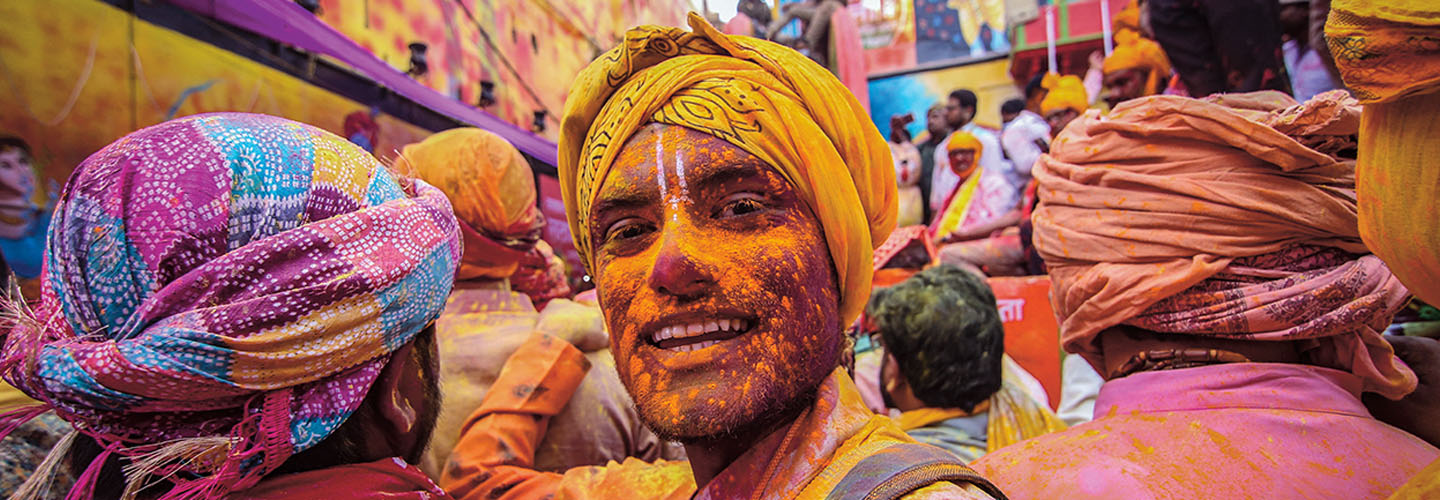
Clouds of colorful powder were everywhere in March during celebrations for the ancient Hindu holiday of Holi. Fistfuls were tossed into the air, flung onto clothes, and smeared across faces. Holi (pronounced “holy”) marks the coming of spring and is observed across parts of India and Nepal, as well as in South Asian communities worldwide. The celebrations for this centuries-old festival vary from place to place, but they generally begin with people gathering around bonfires to sing and dance. Then, the next morning, they go out to throw bursts of dyed powder, called gulal, on just about everything. The colors come from a story about the Hindu god Krishna, who was cursed with blue skin. He playfully paints his love interest Radha’s face with color to cover her fair skin. Some people partake in worship during the festival, offering prayers to the gods. For others, Holi is about community. As Ratikanta Singh, of northeastern India, puts it: “People forget their misunderstandings or enmity during this occasion and again become friends.”