

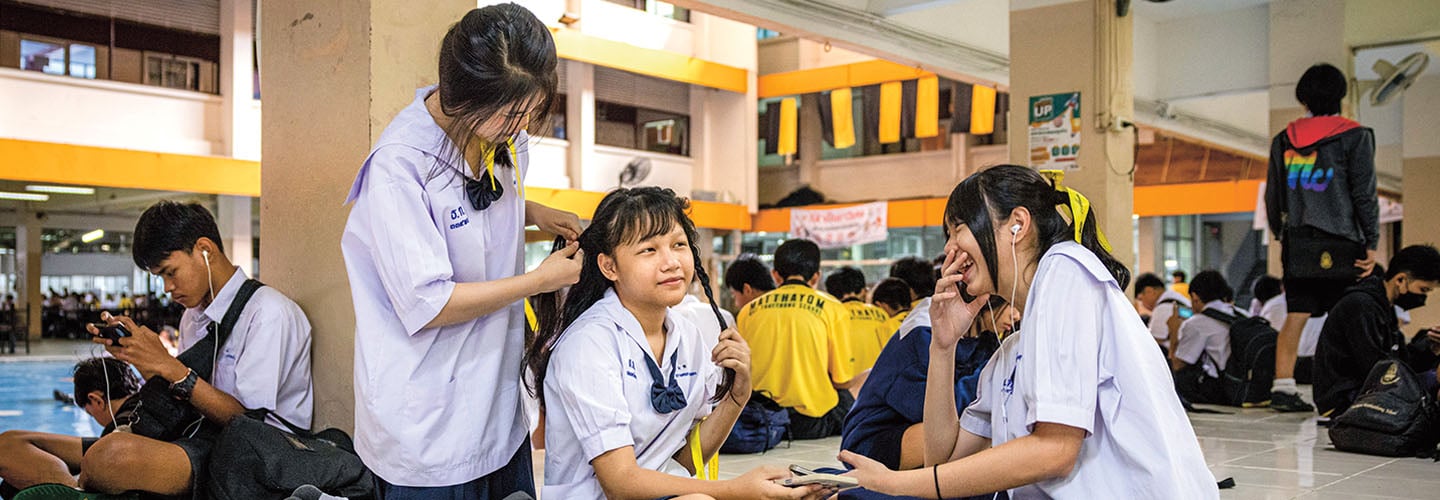

The teenager showed up at his new school to start the school year. But as it turned out, he wasn’t ready: His bangs were too long.
Having failed a much-feared rite of the Thai public school system—the hair inspection—he was subjected to another. His teacher grabbed a pair of scissors and clumsily chopped his hair, right in front of the class.
“My classmates were all staring at me. I felt so embarrassed,” says the 15-year-old from southern Thailand, who asked not to be identified for fear of reprisal from his teachers. The incident, he says, remains “a scar in my heart.”
For decades, public schools in Thailand have policed not only students’ manners but also their looks. In addition to wearing uniforms and keeping their nails tidy, students may be required to either get a crew cut or trim their hair at the ears. Dyed hair isn’t allowed. Running afoul of these rules can mean an unwanted haircut in class, a humiliating experience many Thais vividly remember into adulthood.
Students have long campaigned for loosening the rules, which a military government introduced in 1972. It was a key demand when they took to the streets in 2020 to protest the military-backed government then in power. That year, a group of 23 students petitioned Thailand’s Supreme Administrative Court to overturn the hairstyle directive, which was enforced by the Ministry of Education.
In March 2025, the high court overturned the rule. Now schools set their own policies. But students say these oppressive military-style rules remain, especially in rural areas.
This past July, at a school in Ratchaburi Province, west of Bangkok, teachers cut the hair of 50 girls who were wearing their hair past the name tags on their uniforms. After the students shared their experience on social media, the school issued an apology and vowed to review its disciplinary rules.
A teenager showed up at his new school to start the school year. But as it turned out, he wasn’t ready. His bangs were too long.
He failed the hair inspection, a much-feared rite of the Thai public school system. Then his teacher grabbed a pair of scissors and cut his hair, right in front of the class.
“My classmates were all staring at me. I felt so embarrassed,” says the 15-year-old from southern Thailand. He asked not to be identified for fear of punishment from his teachers. The event, he says, remains “a scar in my heart.”
For decades, public schools in Thailand have policed students’ manners and even their physical appearance. Students must wear uniforms and keep their nails tidy. They may also be required to either get a crew cut or trim their hair at the ears. Dyed hair is not allowed. Breaking these rules can mean an unwanted haircut in class. It’s a humiliating experience many Thais remember into adulthood.
A military government introduced the rules in 1972. Students have long campaigned for loosening the rules. In 2020, it was a key demand during protests against the military-backed government then in power. That year, a group of 23 students petitioned Thailand’s Supreme Administrative Court to overturn the hairstyle directive.
In March 2025, the high court overturned the rule. Now schools set their own policies. But in rural areas, these oppressive military-style rules remain in place, students say.
This past July, at a school in Ratchaburi Province, west of Bangkok, teachers cut the hair of 50 girls. Their hair went past the name tags on their uniforms. The students shared their experience on social media. The school issued an apology and promised to review its disciplinary rules.