


Jim McMahon
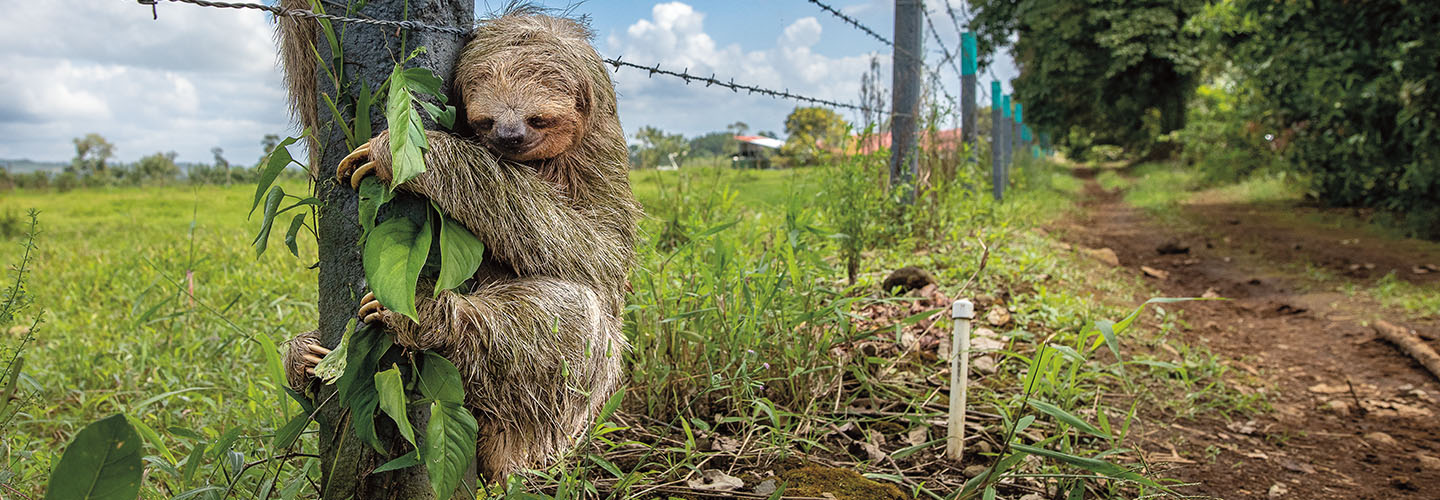
Right before a photographer captured this image of a brown-throated three-toed sloth, the creature had crawled across a dirt road in Costa Rica, interrupting traffic. Eventually, the slow-moving mammal reached a barbed wire fence post and clung to it tightly. Sloths rely on trees to move, feed, and breed, but as forest habitats are cleared or become fragmented, the animals are often forced onto the ground, where they face many hazards, including being hit by cars or attacked by dogs.
To help, some Costa Rican organizations have begun creating aerial rope bridges that sloths and other animals can use to travel from tree to tree. The Costa Rican government is considering legislation that would require road infrastructure projects to include wildlife crossings, such as aerial bridges or underground passages.
Costa Rica has made conservation a priority and has set aside about a third of its land for preservation. But creatures there still need help, experts say. “Tree cutting continues on a daily basis and the animals suffer from not being able to freely move around,” says Sam Trull, executive director of The Sloth Institute Costa Rica. “Installing wildlife crossings is the minimum that needs to be done.”