


Carlos Williams was running late on September 11, 2001. At 8:46 that morning, he was rushing down the street toward Stuyvesant High School in New York City, where he had started ninth grade just days earlier. Suddenly, a huge airplane flew low overhead and smashed into the upper floors of the North Tower of the World Trade Center, just a few blocks away.
“I felt the heat from that explosion,” says Williams, now 39. “It was a moment of disbelief.”
Uncertain how to make sense of what he’d just seen, Williams hurried into his school as fire trucks and police cars raced toward the burning building. In his English class on the ninth floor, students pressed against the windows, straining to see what was happening outside.
What Williams and his classmates witnessed was the start of the deadliest foreign attack that the United States has ever experienced on its own soil.
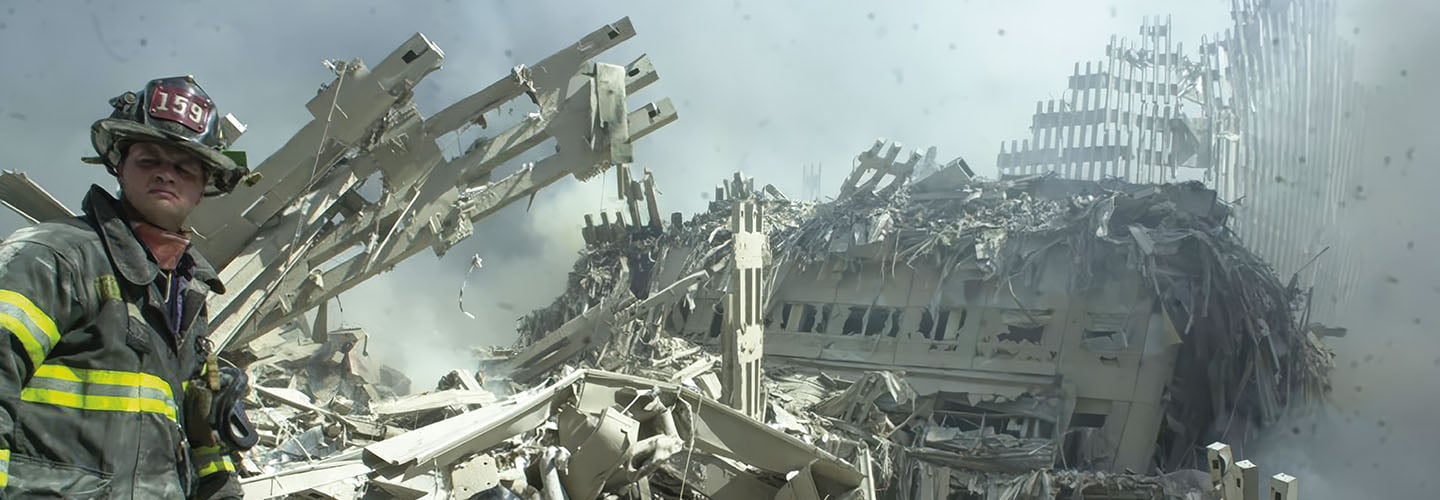
On that day, 19 terrorists hijacked four commercial planes and turned them into airborne weapons. They flew two jets full of passengers into New York’s 110-story-tall Twin Towers, causing the iconic skyscrapers to catch fire and collapse with thousands of people trapped inside.
The second plane crashed into the South Tower at 9:03 a.m., 17 minutes after the first plane hit. Thirty-four minutes later, hijackers flew a third plane that had been en route from Virginia to Los Angeles into the Pentagon—the Department of Defense headquarters—outside Washington, D.C. A fourth plane, immortalized as United Flight 93, crashed shortly afterward in rural Pennsylvania, brought down as passengers bravely tried to retake the cockpit. Authorities believe it was headed for the White House.
The hijackings were part of a coordinated attack. In all, 2,977 people lost their lives—574 more than the number who died in Japan’s assault on Pearl Harbor during World War II (1939-45). But the damage went far beyond the death toll, and 25 years later, the world remains a vastly different place than it was before the day that became known as 9/11.
“There was a profound loss of innocence and shock that we could be attacked that way. It really shattered our sense of security as a nation,” says Jon Alterman of the Center for Strategic and International Studies, in Washington, D.C. It was also deeply disorienting for the rest of the globe to see the U.S. attacked so brazenly, he says. “There was a remarkable expression of solidarity from countries around the world.”
At 8:46 a.m. on September 11, 2001, Carlos Williams was running late. He was rushing down the street toward Stuyvesant High School in New York City. He had just started ninth grade a few days earlier. Suddenly, a huge airplane flew low overhead. A few blocks away it smashed into the upper floors of the North Tower of the World Trade Center.
“I felt the heat from that explosion,” says Williams, now 39. “It was a moment of disbelief.”
Williams didn’t know what he had just seen. He hurried into his school as fire trucks and police cars raced toward the burning building. On the ninth floor, students in his English class leaned against the windows. They were trying to see what was happening outside.
Williams and his classmates had witnessed the start of the deadliest foreign attack on United States soil.
On that day, 19 terrorists hijacked four commercial planes. The planes were turned into airborne weapons. The men flew two jets full of passengers into New York’s 110-story-tall Twin Towers. The buildings caught fire and collapsed. Thousands of people were trapped inside.
Seventeen minutes after the first plane hit, the second plane crashed into the South Tower at 9:03 a.m. Thirty-four minutes later, hijackers flew a third plane that had been heading from Virginia to Los Angeles into the Pentagon. The Department of Defense headquarters is located outside Washington, D.C. A fourth plane, known as United Flight 93, crashed shortly afterward in rural Pennsylvania. It was brought down by passengers who bravely tried to retake the cockpit. Authorities believe it was headed for the White House.
The hijackings were part of a planned attack. In all, 2,977 people lost their lives—574 more than the number who died in Japan’s assault on Pearl Harbor during World War II (1939-45). But the damage went far beyond the death toll. Twenty-five years later, the world remains a very different place than it was before the day that became known as 9/11.
“There was a profound loss of innocence and shock that we could be attacked that way. It really shattered our sense of security as a nation,” says Jon Alterman of the Center for Strategic and International Studies in Washington, D.C. It was also confusing for the rest of the globe to see the U.S. attacked so brazenly, he says. “There was a remarkable expression of solidarity from countries around the world.”