


Jim McMahon
Last October, the morning after a storm slammed into western Alaska, Jimmy Jones was collecting driftwood on the beach near Quinhagak, a fishing village. When he reached to pick up a log, a face stared up at him from the sand beneath.
For a second, he worried he’d found a human body. But looking closer, Jones realized it was a wooden mask.
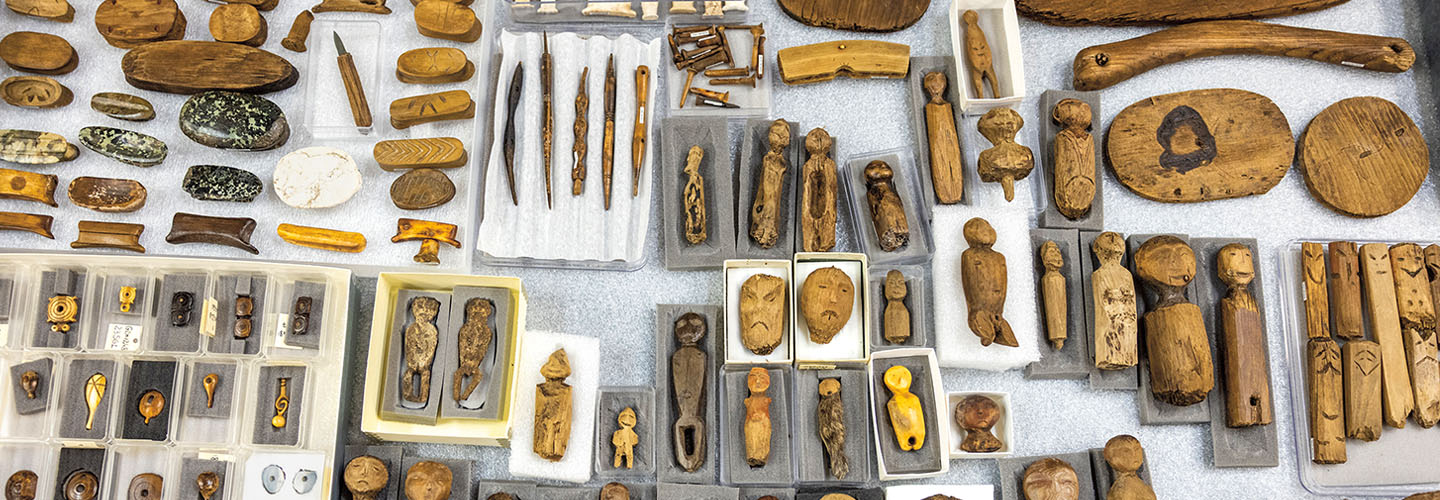
The remnants of Typhoon Halong, which killed at least one person and displaced hundreds around the region, had eaten into 60 feet of shoreline and destroyed an archaeological dig site 3 miles south called Nunalleq. Thousands of artifacts had been swept up and scattered along the Bering Sea coastline. Many of them were 600 years old, left behind by the ancestors of the Yup’ik people who live in Quinhagak today (see “Alaska’s Native People,” below).
In the days that followed, Quinhagak residents raced to recover the artifacts washing ashore.
Last October, the remnants of Typhoon Halong slammed into western Alaska near the fishing village of Quinhagak. The next morning, Jimmy Jones was collecting driftwood on the beach. When he reached to pick up a log, a face stared up at him from the sand beneath.
For a second, he worried he’d found a human body. But looking closer, Jones realized it was a wooden mask.
The storm, which killed at least one person, displaced hundreds around the region. It had eaten into 60 feet of shoreline. An archaeological dig site 3 miles south called Nunalleq was destroyed. Thousands of artifacts had been washed away and scattered along the Bering Sea coastline. Many of them were 600 years old. They had been left behind by the ancestors of the Yup’ik people who live in Quinhagak today (see “Alaska’s Native People,” below).
In the days that followed, Quinhagak residents raced to recover the artifacts washing ashore.