

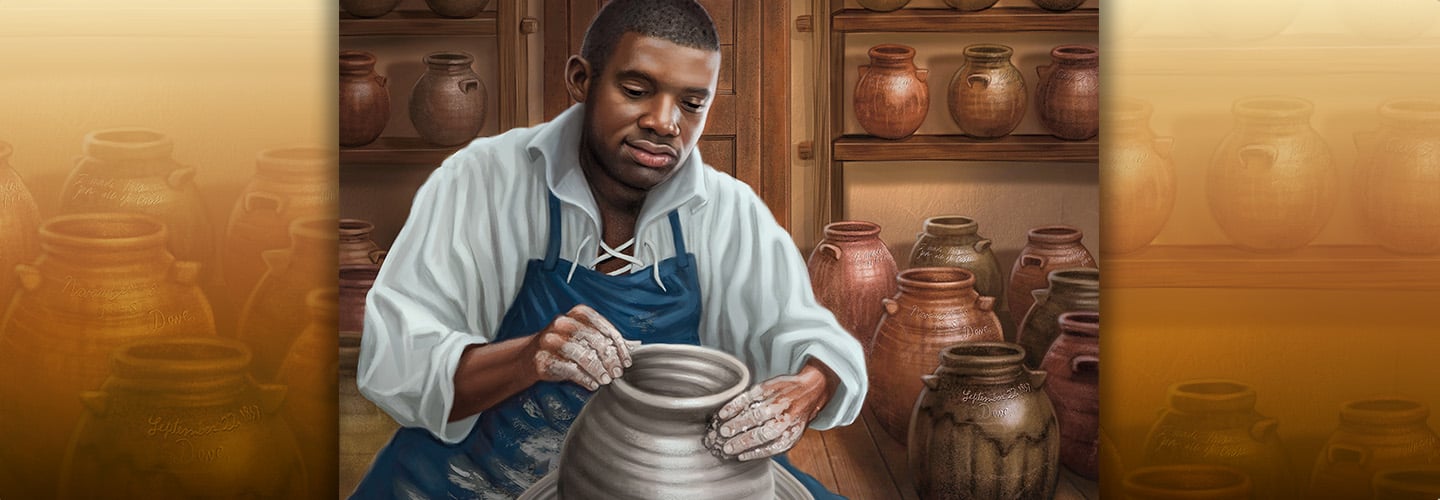

David Drake was an enslaved man who worked as a potter in Edgefield, South Carolina, during the 19th century. Known as Dave the Potter, he made impressively large ceramic jars, many inscribed with verses of poetry. Today his pieces are displayed in renowned art museums, and single works have sold for more than $1 million. But who really owns his art? His descendants say his work is rightfully theirs.
They believe most of these objects were essentially stolen from Drake—made under duress and sold or traded without his consent while he was enslaved. They see Drake’s ambitious ceramic storage jars as his artistic, spiritual, and financial legacy—and their own. Now they’re seeking to recover ownership of Drake’s ceramics from museum collections and private homes across the country.
The family first discovered their connection to the artist in 2016. One day, Daisy Whitner, a retiree living in Washington, D.C., received a call from a genealogist who specialized in African heritage. The woman asked for Whitner’s parents’ and grandparents’ birth dates and birthplaces. Then she started asking about Whitner’s great-grandparents. By the end of the call, Whitner had learned that she was David Drake’s great-great-great-granddaughter.
David Drake was an enslaved man who worked as a potter in Edgefield, South Carolina, during the 19th century. Known as Dave the Potter, he made impressively large ceramic jars. Many are inscribed with verses of poetry. Today his pieces are displayed in renowned art museums. Single works have sold for more than $1 million. But who really owns his art? His descendants say his work is rightfully theirs.
They believe most of these objects were essentially stolen from Drake. The pieces were made while Drake was enslaved. They were made under duress and sold or traded without his consent. His descendants see Drake’s ambitious ceramic storage jars as his artistic, spiritual, and financial legacy. Now they’re seeking to recover ownership of Drake’s ceramics from museum collections and private homes across the country.
In 2016, Daisy Whitner, a retiree living in Washington, D.C., received a call from a genealogist. She specialized in African heritage. The woman asked for Whitner’s parents’ and grandparents’ birth dates and birthplaces. Then she started asking about Whitner’s great-grandparents. By the end of the call, Whitner had learned that she was David Drake’s great-great-great-granddaughter.